Turn roadway video into PCI and distress data

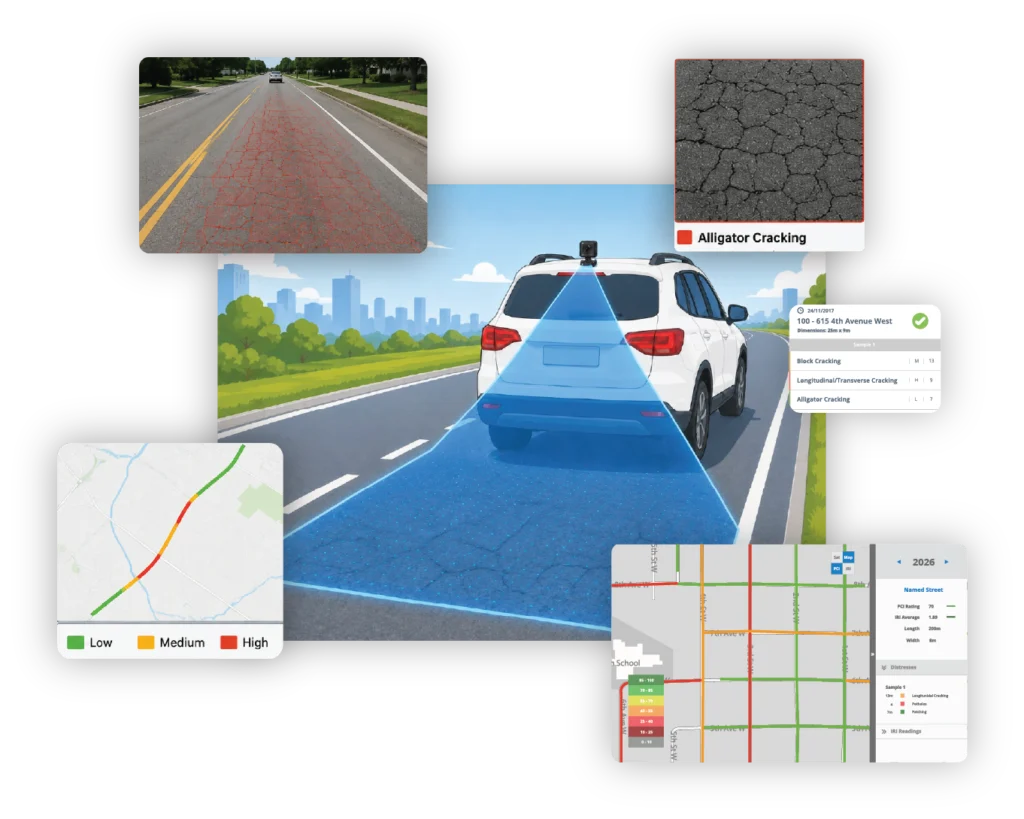
TotalPave processes imagery you collect with low-cost cameras into PCI scores and distress-level detail following various standards including ASTM D6433, PASER-style numerical ratings, or MTO SP. Results are posted directly to your web portal.

WHY SURFACEVIEW PCI

Replace walking surveys with drive-through collection

Record the network from a moving vehicle and let TotalPave handle the detailed pavement review. This reduces the trained field time required to complete a network-level assessment.

Low-cost equipment

Collect with a GoPro or smartphone camera mounted to the vehicle.

Reduce field inspection time

Capture continuous roadway imagery while driving instead of stopping to inspect and measure every sample.

Receive distress-level detail

TotalPave processes the imagery into PCI scores and individual pavement distress records.

Follow standard PCI outputs

Receive results structured around ASTM D6433, PASER-style, or MTO SP pavement condition methodologies.

Keep a visual road record

Use collected imagery as supporting context when reviewing pavement condition and distress results.

Move directly to the portal

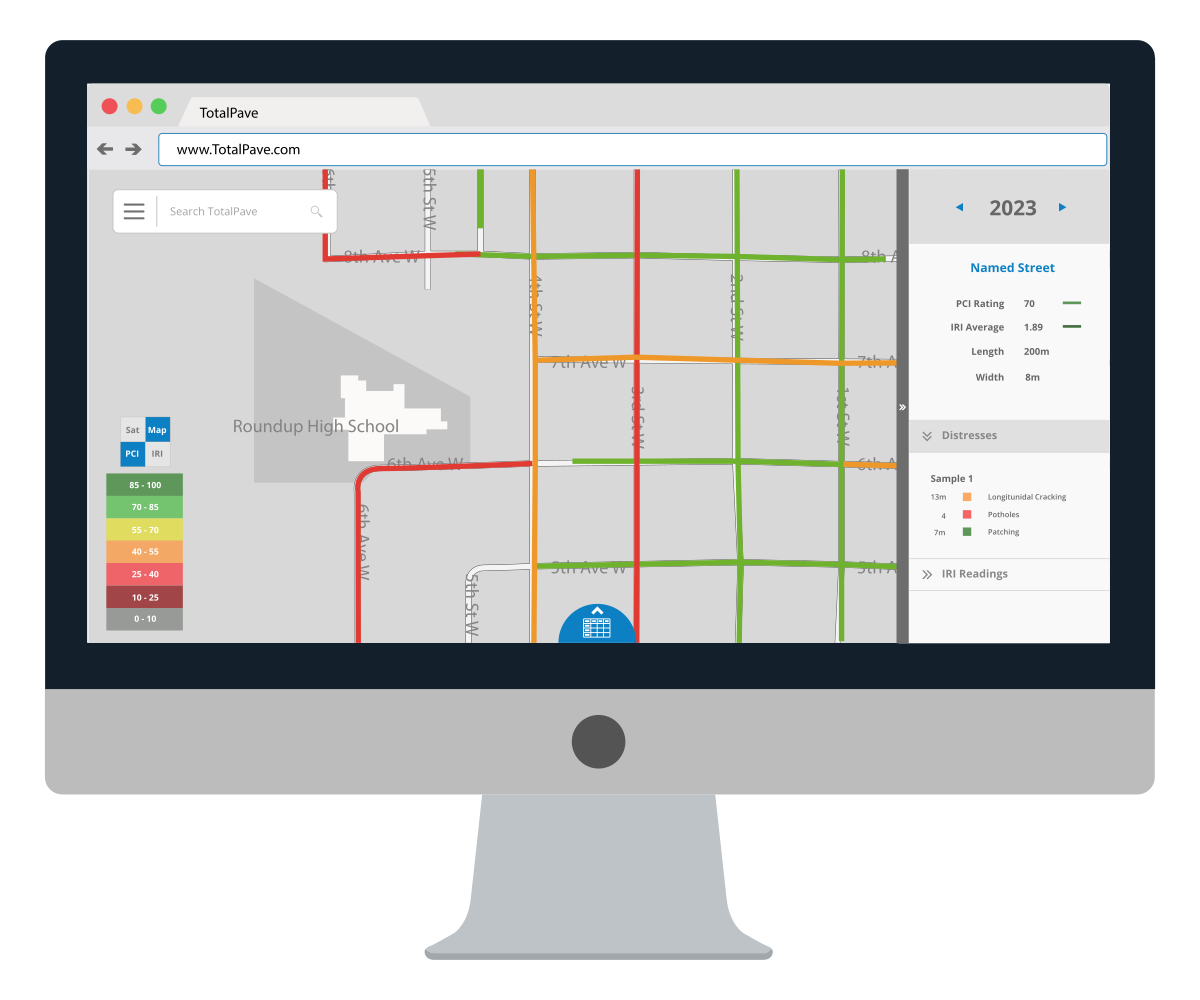
Review mapped PCI, distress details, tables, exports, and network summaries in TotalPave.
HOW IT WORKS

From roadway imagery to PCI results in four steps

Set the camera, drive the required routes, transfer the footage, and review the completed condition dataset online.

Step 1

Mount

Secure a GPS-enabled camera to the vehicle centered on the lane and aimed toward the pavement.

Step 2

Capture

Record continuous, clear roadway video by direction in daylight on dry pavement.

Step 3

Transfer

Submit the raw video and optional GIS data or route reference files to TotalPave.

Step 4

Review

TotalPave processes the imagery and posts PCI and distress results to your web portal.

SERVICE CAPABILITIES

What SurfaceView can process

SurfaceView is structured around georeferenced imagery and the pavement condition methodology selected for the project.

Georeferenced video input

Process roadway footage collected with GPS-enabled cameras and supporting route-reference files.

Full-lane assessment

Capture the pavement from the road centerline to the shoulder or lane edge for complete coverage.

Distress-level processing

Produce individual pavement distress records alongside the calculated PCI result.

Standard PCI outputs

Receive results aligned with the pavement condition methodology selected for the project.

Direction-based collection

Record each roadway section by direction with continuous coverage through the section.

Section-level delivery

Results are assigned to the project road sections so the dataset can be mapped, reviewed, compared, and exported consistently.

WEB PORTAL OUTPUTS

Move from the network overview to the supporting evidence

Color-coded PCI map layers

View processed PCI results as color-coded road sections on the TotalPave map. Select individual sections to review condition scores and the distress information identified from the collected imagery.

Search, filter, and export SurfaceView PCI results for spreadsheets, GIS, reports, and pavement management. Detailed outputs provide the distress-level information behind the section scores.

Use network summaries and condition distributions to understand overall pavement needs, communicate results, compare collection years, and support maintenance planning.

FAQ

SurfaceView PCI FAQs

Answers to common questions about cameras, mounting, weather, collection coverage, processing, and outputs.

What camera equipment is required?

A GoPro or equivalent camera is required, with 4K recommended, GPS enabled, and a rigid exterior vehicle mount positioned high on the rear or roof.

Yes. Client staff can collect the roadway footage when the camera setup, coverage, weather, and route requirements are followed.

The camera should be centered on the lane, aimed downward and slightly backward, and positioned so the full lane width is visible.

Collect during daylight on dry pavement with a clean lens and unobstructed view. Avoid rain, standing water, excessive glare, and heavy shadows where possible.

Record continuously through each roadway section by direction and provide available KMZ, KML, GPX, or other route-reference files.

SurfaceView produces mapped PCI scores and individual distress data in the TotalPave web portal, with tables and export options.

No specialized survey vehicle is required, but the camera must be rigidly mounted and the imagery must meet the stated coverage and quality requirements.

REQUEST A DEMO

See how SurfaceView PCI Can work for you

Get a live overview of the SurfaceView workflow, imagery collection requirements, portal outputs, and how it can fit your road condition assessment process.

What happens next?

After you submit the form, we will review your road network requirements and follow up with the best next steps for your team.

Get a quote or demo

Tell us about your road network or project and we will help identify the simplest way to collect PCI data.